Digital Audio Waveform Generation

For various projects of mine I need to be able to synthesize sound, so I decided to take a quick dabble in the realm of Digital Signal Processing. I mean, how hard could it be, right?

After some fooling around with the Sampled Audio Subsystem of the Java Virtual Machine I was able to hear sinusoidal waveforms of various frequencies from my speakers, and I was starting to think that I am probably almost done, until I tried to play square waveforms. That's when I realized that I had barely scratched the surface. The square waveforms sounded pretty awful at any frequency, and especially at high octaves they sounded like random notes. Triangular waveforms, sawtooth waveforms, really anything except sinusoidal waveforms all suffered from the same problem.

A bit of googling around soon revealed the name of the source of my troubles: aliasing.

A naïvely sampled square wave,
exhibiting a bad case of aliasing. Note how some of the peaks and valleys consist of 3 samples, while some consist of only 2 samples.
Read more »

SVG in WPF

My notes on how to use SVG graphics in a WPF application

The Goal

The goal is to be able do do things like this:

<Button Content="{StaticResource mySvgImage}">

... where mySvgImage somehow stands for a vector image that has somehow been obtained from an SVG file.

The solution must not involve any proprietary, closed-source libraries.

Naturally, we want one of the following:

  • Either directly include SVG files into our application as resources, or, if that is not possible, then:
  • Have an "asset pipeline" approach where our SVG files are automatically converted during build into some format which is suitable for inclusion as a resource.
Read more »

Java with Maven: Giving CI/CD a try

Please note that this is work in progress. I am still working on it and refining it, as my understanding of it improves.

I have a set of public repositories on GitHub showcasing my work, () which is in java with maven. These projects are interdependent, so when you check out one of them, in order to compile and run it you need the binaries of some of the others. You could manually check out all of them and put them in an IDE project, but that's too much work. Solving this problem requires having Continuous Integration & Continuous Deployment (CI/CD) in place, so I decided to try my luck in setting one up using free services only.

Read more »

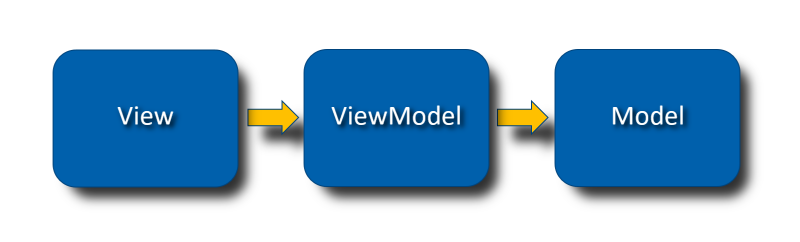
The MVVM architectural design pattern

This is a brief technical explanation of MVVM, with enough detail (borrowed from its WPF implementation) and examples to allow the reader to grasp how it actually works.

Read more »

Object Lifetime Awareness

Abstract

Garbage collectors have given us a false sense of security with respect to what happens to an object once we stop thinking about it. The assumption is that it will be magically taken care of, but this does not always go as hoped, resulting in memory leaks and bugs due to failure to perform necessary cleanup. Tools for troubleshooting such problems are scarce, and not particularly helpful, so finding and fixing such problems is notoriously difficult.

A methodology is presented, which differs from current widespread practices, for maintaining awareness of, and exercising full deterministic control over, the lifetime of certain objects in a garbage-collected environment. We issue hard errors in the event of misuse, and accurate diagnostic messages in the event of omissions, thus improving the robustness of software and lessening the troubleshooting burden.

Read more »

The famous "Could not load file or assembly or one of its dependencies" error message

If you have ever done any software development under Microsoft Windows you have probably come across this famous error message:

System.IO.FileNotFoundException : Could not load file or assembly 'Acme.dll' or one of its dependencies. The specified module could not be found."

Modern software makes heavy use of dynamic link libraries, and the problem with this kind of libraries is that for various reasons they might not be there when you need them, resulting in runtime errors. This is the runtime error you get under Windows when this happens.

Naturally, when you see this message, the first thing to do is to check whether Acme.dll is there, and what you usually discover is that the file is indeed there. When dealing with computers, most error messages that you come across tend to leave some room for troubleshooting, but when the system is reporting that a certain file does not exist on your very own filesystem, while the file is most certainly there, the situation seems really hopeless. You are stymied.

Read more »